📋 Quick Summary
In this article:
- Why Granite Countertops Commonly Crack Around Sinks and Cooktops
- Common Types of Granite Cracks Around Sinks
- Need Granite Countertop Repair Help?
- Common Types of Granite Cracks Around Cooktops
- Can Cracked Granite Around a Sink Be Professionally Repaired?
- Can Granite Cracks Around Cooktops Be Repaired?
- Our Professional Granite Crack Repair Process
- Why Filling the Visible Crack Is Often Not Enough
- Why DIY Repair Is Risky Around Sinks and Cooktops
- Should You Repair or Replace the Granite Countertop?
- Signs That Sink or Cooktop Cracks Need Professional Attention
- How to Protect Granite Around Sinks After Repair
- How to Protect Granite Around Cooktops After Repair
- Professional Granite Countertop Crack Repair in Philadelphia, PA
- Other Professional Countertop Services We Provide
- Frequently Asked Questions About Granite Cracks Around Sinks and Cooktops
- Contact Tri-State Marble Countertop Care for Professional Granite Crack Repair
Cracks around sinks and cooktops are among the most concerning forms of granite countertop damage we encounter in residential and commercial properties. These areas are naturally more vulnerable because fabricating openings for sinks and cooking appliances removes a significant portion of the stone. The narrow sections and inside corners that remain may experience concentrated stress from countertop weight, cabinet movement, sink loads, heat exposure, impacts, and insufficient structural support.
🔑 Key Insight
A crack beside a sink or extending from the corner of a cooktop should not automatically be treated as a simple cosmetic problem. Filling the visible opening without evaluating countertop movement or support conditions may result in an incomplete repair. Our objective is to help property owners understand the damage, explore practical restoration options, and preserve existing granite countertops whenever professional repair is appropriate.
If you have discovered cracked granite around a sink, cooktop, faucet opening, appliance cutout, countertop seam, or nearby edge, contact Tri-State Marble Countertop Care at (215) 840-1440 to discuss professional inspection and repair services in Philadelphia and surrounding areas.
Why Granite Countertops Commonly Crack Around Sinks and Cooktops
Granite is one of the most durable natural stone materials used for countertops, but strength does not eliminate the possibility of cracking. The design and fabrication of a countertop can create areas where the stone is more vulnerable to stress.
A full granite slab has substantial strength. Once openings are cut for sinks and cooktops, the remaining sections may become considerably narrower. These narrow sections must continue supporting weight and resisting movement throughout years of daily use.
Understanding why the damage developed is one of the most important parts of planning a professional repair.
Narrow Granite Sections Around Sink Openings
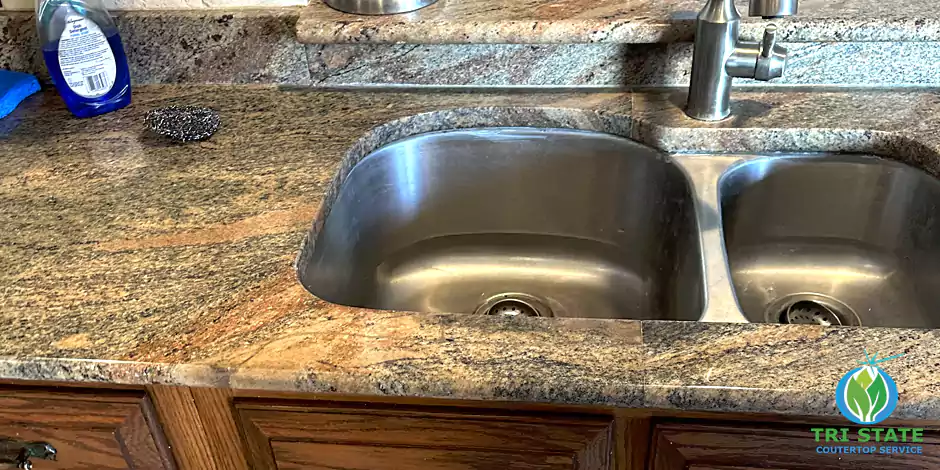
The strip of granite running along the front or back of a sink opening is commonly referred to as a sink rail. Sink rails are significantly narrower than the main countertop surface.
These areas can experience stress during fabrication, transportation, installation, plumbing work, and everyday use. If a sink rail has inadequate reinforcement or the cabinets underneath move, a crack can develop across the narrow section.
Cracks may appear at the corners of the sink opening, extend toward the countertop edge, travel toward the backsplash, or cross the entire sink rail.
Stress Concentration at Cooktop Corners
Cooktop openings create inside corners in the granite slab. Stress can become concentrated at these points, especially when the countertop is not adequately supported.
A crack may begin at one corner of the cooktop and gradually extend outward. Property owners sometimes overlook these cracks because part of the damage may be hidden underneath the appliance.
Removing or adjusting the cooktop may reveal that the crack extends farther than initially expected.
Insufficient Countertop Support
Natural stone countertops require stable and level support.
If cabinets settle, shift, become loose, or were installed unevenly, the granite may experience stress. Narrow countertop sections around sinks and cooktops can be particularly vulnerable.
When structural movement is contributing to the damage, simply filling the visible crack may not provide a durable solution.
Heavy Sink Installations
Large undermount sinks, cast-iron sinks, farmhouse sinks, and other heavy fixtures can place substantial loads on cabinets and countertop systems.
A sink should have appropriate support rather than relying entirely on the granite countertop to carry its weight.
If the sink support system fails or shifts, additional stress can be transferred to the surrounding stone.
Impact Damage
Heavy cookware, appliances, tools, and other objects can damage granite when dropped near sink or cooktop openings.
The narrow stone sections around these openings may have less ability to distribute impact forces than larger countertop areas.
Heat and Temperature Changes
Granite is naturally heat resistant, but repeated temperature changes can contribute to stress in already vulnerable areas.
Cooktop openings may be exposed to heat, appliance vibration, installation pressure, and repeated use. Existing weaknesses can become more noticeable over time.
Improper Fabrication or Installation
Problems can also originate during fabrication or installation.
Sharp inside corners, inadequate reinforcement, uneven cabinet support, improper handling, or excessive pressure during installation may contribute to future cracking.
The visible crack may not appear immediately. Damage can develop gradually as the countertop experiences normal use and structural movement.
Common Types of Granite Cracks Around Sinks
We evaluate sink-area cracks according to their location, direction, depth, movement, and surrounding countertop condition.
- Cracks Across the Front Sink Rail
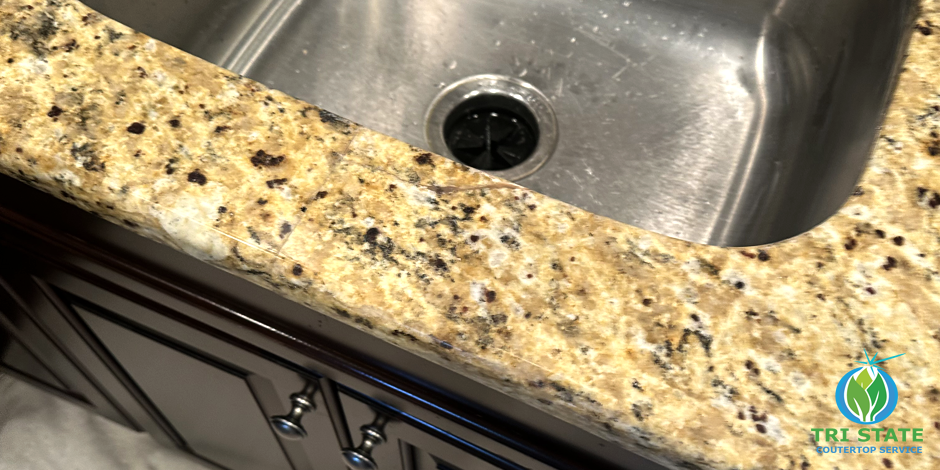
The front sink rail is one of the most vulnerable sections of a granite countertop repair.
Cracks may travel completely across the narrow strip between the sink opening and countertop edge.
Professional repair may require alignment, stabilization, bonding, reinforcement, surface leveling, and cosmetic restoration. - Cracks Behind the Sink
The section between the sink and backsplash can also develop cracks.
These repairs may be more difficult because faucets, plumbing fixtures, backsplashes, and limited working space can restrict access. - Cracks Extending From Sink Corners
A crack can begin at the corner of the sink opening and extend into the larger countertop surface.
This pattern may indicate concentrated stress around the opening and should be evaluated before the damage grows. - Cracks Near Faucet Openings
Granite can crack between faucet holes, soap dispenser openings, sink cutouts, and backsplash areas.
These narrow sections may be vulnerable to installation pressure, plumbing work, impact, and countertop movement. - Cracks Combined With Sink Separation
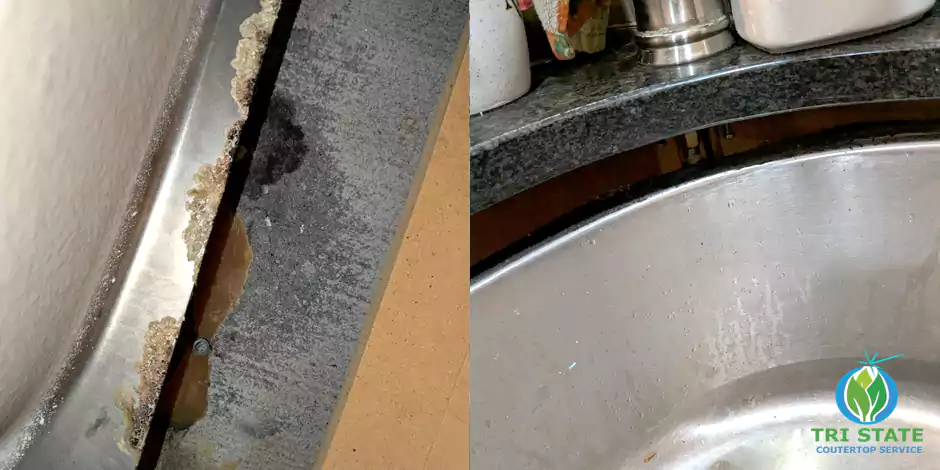
In some situations, a countertop crack occurs together with a loose or separating undermount sink.
The condition of the sink support system should be evaluated because movement can continue placing stress on the granite.
Common Types of Granite Cracks Around Cooktops
Cooktop-area damage requires careful evaluation because portions of the crack may be concealed by the appliance.
Cracks Starting at Cooktop Corners
Inside corners can concentrate stress. A crack may begin at one corner and travel outward into the countertop.
The technician must evaluate whether the surrounding stone remains stable and adequately supported.
Cracks Between the Cooktop and Countertop Edge
The strip of granite between a cooktop opening and the front countertop edge can be relatively narrow.
Repeated pressure, cabinet movement, installation stress, and impacts can contribute to cracking in this area.
Cracks Hidden Under the Cooktop
Some cracks are only partially visible until the appliance is moved.
Professional evaluation may reveal additional damage underneath the cooktop frame.
Heat-Related Surface Damage Near Cooktops
Discoloration, damaged repair materials, surface deterioration, and existing fractures can occur around cooking areas.
Not every problem near a cooktop is caused directly by heat. Proper evaluation is necessary to identify the actual condition of the stone.
Can Cracked Granite Around a Sink Be Professionally Repaired?
Many sink-area granite cracks can be professionally repaired.
The appropriate method depends on the amount of movement, crack depth, missing stone, countertop alignment, accessibility, and condition of the cabinets and sink support system.
At Tri-State Marble Countertop Care, we evaluate whether the granite sections require stabilization before the visible crack is restored.
When movement is present, professional repair may involve aligning the damaged sections, strengthening vulnerable areas, bonding the granite, filling the crack, leveling the surface, and improving the appearance of the repair.
The objective is not simply to place material into the crack. We consider the condition of the surrounding countertop and factors that may affect the performance of the repair.
Can Granite Cracks Around Cooktops Be Repaired?
Many cooktop-area cracks can also be repaired when the surrounding granite remains suitable for restoration.
The cooktop opening, nearby cabinet support, countertop movement, crack direction, and accessibility must be evaluated.
Some repairs may require access underneath the granite. Depending on the countertop configuration, the appliance may need to be adjusted or removed by an appropriate professional before restoration work can be completed.
Every situation is different, which is why professional inspection is important before selecting a repair method.
Our Professional Granite Crack Repair Process
Tri-State Marble Countertop Care approaches Granite Countertop Crack Repair Around Sinks and Cooktops in Philadelphia, PA as a restoration service rather than a simple crack-filling procedure.
Initial Damage Evaluation
We begin by examining the visible crack and surrounding granite.
We consider the location of the damage, crack direction, width, depth, countertop movement, sink or cooktop configuration, nearby seams, and accessibility.
Checking Countertop Stability
We evaluate whether the damaged sections are level and stable.
If one side of the crack moves or sits higher than the other, stabilization may be required before cosmetic repair begins.
Evaluating Surrounding Support Conditions
Support problems can contribute to recurring cracks.
When accessible, the area surrounding the damage may be evaluated for conditions that could affect the repair.
Cleaning and Preparing the Repair Area
Grease, moisture, food residue, cleaning products, old adhesive, silicone, and loose particles can interfere with professional repair materials.
The damaged area is carefully prepared before restoration materials are applied.
Aligning the Granite Sections
If the countertop sections have shifted, professional techniques may be used to improve alignment.
Creating a level surface is important for both structural restoration and the final appearance of the repair.
Stabilizing and Reinforcing Vulnerable Areas
Some sink and cooktop cracks require additional reinforcement.
The appropriate method depends on the location, accessibility, countertop design, and condition of the stone.
Applying Professional Stone Repair Materials
Professional-grade adhesives, resins, epoxies, pigments, and other stone restoration materials may be selected according to the repair requirements.
Materials are applied carefully to bond damaged areas and restore the crack.
Color Coordinating the Repair
Granite contains natural variations in color and pattern.
Repair materials may be adjusted to coordinate with the surrounding stone and reduce the visual contrast of the repaired area.
Leveling the Repaired Surface
After curing, excess repair material is carefully removed.
The repaired section is worked to create a smoother transition with the surrounding granite.
Restoring the Surface Finish
Depending on the repair location and countertop condition, additional finishing may be performed to coordinate the repaired area with the surrounding surface.
Final Inspection
The completed repair is reviewed, and property owners may receive practical recommendations for protecting vulnerable countertop sections.
Why Filling the Visible Crack Is Often Not Enough
One of the most common mistakes in granite countertop repair is treating every crack as a cosmetic defect.
If countertop sections continue moving, repair materials may eventually separate. If a heavy sink lacks proper support, the granite may remain under stress. If cabinets have settled, the countertop may continue flexing.
A professional repair should consider why the crack developed and whether additional stabilization is necessary.
This is particularly important for sink rails and cooktop corners because these sections are already more vulnerable than larger areas of the granite slab.
Why DIY Repair Is Risky Around Sinks and Cooktops
DIY repair kits may appear convenient, but sink and cooktop cracks can involve structural conditions that are difficult to evaluate without experience.
Using the Wrong Adhesive
Household glue, caulk, silicone, and general-purpose epoxy may discolor the stone, create poor adhesion, or interfere with professional repair materials.
Failing to Address Countertop Movement
Filling a moving crack does not eliminate the underlying cause of the damage.
Creating an Uneven Surface
Excess repair material can cure above the countertop surface.
Removing hardened material without scratching or dulling polished granite can be difficult.
Making Future Repairs More Complicated
Old adhesives and repair products may need to be removed before professional restoration can begin.
This can increase the time and complexity of future repairs.
Should You Repair or Replace the Granite Countertop?
A crack around a sink or cooktop does not automatically require complete countertop replacement.
When the damage is localized and the surrounding granite remains suitable for restoration, professional repair may preserve the existing countertop.
Replacement can involve countertop demolition, disposal, plumbing work, appliance adjustments, new stone selection, fabrication, transportation, installation, seam work, and possible cabinet or backsplash modifications.
Repair may be a practical alternative when the existing granite remains attractive and structurally restorable.
However, extensive fractures, major cabinet problems, severe movement, widespread damage, or planned kitchen remodeling may make replacement more appropriate.
Professional evaluation can help property owners understand their options.
Signs That Sink or Cooktop Cracks Need Professional Attention
Some countertop cracks should be evaluated promptly.
Contact a professional if the crack is growing, one side is higher than the other, movement can be felt, the sink is loose or separating, the crack extends from a cooktop corner, pieces of granite are missing, an old repair has failed, or the damage is collecting moisture and debris.
Early inspection may provide more restoration options before the damaged area becomes more complicated.
How to Protect Granite Around Sinks After Repair
Avoid Placing Excessive Weight on Sink Rails
Do not stand, sit, or place heavy objects on narrow granite sections around the sink.
Monitor Undermount Sink Stability
If an undermount sink begins separating from the countertop or cabinets, have the support system evaluated.
Prevent Heavy Impacts
Handle cookware, appliances, and tools carefully around countertop openings and edges.
Keep the Area Clean With Stone-Safe Products
Use cleaning products intended for natural stone surfaces and avoid harsh chemicals or abrasive materials.
Watch for New Movement
Changes in cabinet alignment, countertop seams, wall gaps, or surface levels may indicate movement that should be investigated.
How to Protect Granite Around Cooktops After Repair
Use Appropriate Heat Protection
Use trivets and heat-resistant pads for hot cookware rather than placing extremely hot pots and pans directly on countertop surfaces.
Avoid Standing on Narrow Countertop Sections
Do not place concentrated body weight on the granite strips surrounding cooktop openings.
Handle Appliance Installation Carefully
Cooktops should be installed and adjusted without placing unnecessary pressure on granite edges and corners.
Monitor Existing Cracks and Seams
Contact a professional if repaired areas begin changing or new damage develops.
Professional Granite Countertop Crack Repair in Philadelphia, PA
Tri-State Marble Countertop Care provides professional Granite Countertop Crack Repair Around Sinks and Cooktops in Philadelphia, PA for residential and commercial properties.
We work with homeowners, landlords, property managers, contractors, real estate professionals, and commercial property owners who need practical solutions for damaged granite countertops.
Our objective is to evaluate the actual condition of the countertop and recommend a restoration approach based on the stone, damage, stability, accessibility, and surrounding countertop system.
If you have cracked granite near a kitchen sink, bathroom sink, cooktop, countertop opening, seam, or edge, contact our company to discuss professional repair options.
Other Professional Countertop Services We Provide
Marble Countertop Polishing
We provide professional polishing services for marble countertops affected by dullness, uneven appearance, surface wear, and loss of finish.
Marble Countertop Repair
Our marble countertop repair services address cracks, chips, damaged edges, seams, and other localized stone damage.
Granite Countertop Repair
We repair granite countertop cracks, chips, broken edges, separated seams, and other forms of localized damage.
Quartz Countertop Repair
Our quartz repair services may address cracks, chips, seam problems, damaged edges, and other countertop issues.
Quartz Countertop Stain Removal
We evaluate quartz discoloration and surface problems to determine appropriate cleaning, treatment, or restoration options.
Countertop Repair
We provide professional countertop repair solutions for a range of natural stone and engineered countertop materials.
Frequently Asked Questions About Granite Cracks Around Sinks and Cooktops
Can a Crack Across a Granite Sink Rail Be Repaired?
Many cracked sink rails can be professionally repaired. The appropriate restoration method depends on movement, crack depth, support conditions, accessibility, and the condition of the surrounding stone.
Why Did My Granite Crack Near the Sink?
Possible causes include inadequate support, sink weight, cabinet movement, impact damage, fabrication stress, installation problems, and structural movement.
Can a Crack Starting From a Cooktop Corner Be Repaired?
Many cooktop-area cracks can be repaired when the surrounding granite remains suitable for restoration. The damage and support conditions should be professionally evaluated.
Do You Need to Remove the Sink to Repair the Granite?
Not every sink-area repair requires sink removal. The need for removal depends on the location of the crack, accessibility, countertop condition, and repair method.
Does the Cooktop Need to Be Removed Before Granite Repair?
Some repairs can be completed without removing the cooktop, while others require access to areas hidden underneath the appliance. The repair situation must be evaluated individually.
Will the Repaired Crack Be Completely Invisible?
Professional restoration aims to stabilize the damaged granite and minimize the appearance of the crack. Final visibility depends on granite color, pattern, damage severity, missing material, previous repairs, and surface finish.
How Much Does Granite Crack Repair Around a Sink or Cooktop Cost?
Cost depends on the location, size, depth, movement, accessibility, stabilization requirements, color matching, finishing work, and condition of the countertop. Contact Tri-State Marble Countertop Care to discuss the damage and request service information.
Contact Tri-State Marble Countertop Care for Professional Granite Crack Repair
Cracks around sinks and cooktops should be evaluated carefully because these areas are among the most structurally vulnerable sections of a granite countertop.
A professional repair should consider more than the visible opening. Countertop stability, support conditions, sink or appliance configuration, crack movement, and surrounding stone condition can all affect the restoration approach.
If you need professional Granite Countertop Crack Repair Around Sinks and Cooktops in Philadelphia, PA, contact Tri-State Marble Countertop Care.
Call (215) 840-1440 to discuss granite countertop cracks around sinks, cooktops, seams, edges, and other vulnerable areas and schedule professional countertop repair service in Philadelphia, Bucks County, Montgomery County, Chester County, Delaware County, or Mercer County, New Jersey.